Picture the same front yard on a gray January morning and again on a bright afternoon in June. The plants you choose decide how different those two pictures look. Evergreens and deciduous plants each bring something special to the scene, and the best yards use both.
Evergreen and Deciduous Plants Explained
The difference starts with the leaves. Evergreens keep most of theirs through the year, while deciduous plants drop them for a season and grow them back later. That one habit shapes how a plant looks and what it adds to a yard.
How Evergreen Plants Hold Their Look
Pine and spruce come to mind first for most people, and arborvitae is a familiar sight along many property lines. Their foliage stays put through every month, so the yard never looks bare.
When snow covers the ground, that steady green becomes a welcome sight, and it gives the space a shape that holds from January to December.
How Deciduous Plants Change With the Seasons
Maples and oaks are classic deciduous trees, and dogwoods are loved for their spring blooms. These plants follow a yearly rhythm. Buds open in spring, and leaves fill out by summer. Fall then brings warm color before the branches go bare.
Each stage has its own charm. Even a leafless branch has a quiet beauty when its shape stands out against a winter sky.
Key Differences Between Evergreen and Deciduous Plants
Put side by side, the two plant types play very different roles.
Year-Round Foliage vs. Seasonal Color
Evergreens are the steady ones. Their foliage forms a calm backdrop that looks about the same in every month. Deciduous plants are the showpieces. Spring flowers give way to summer shade, then fall color follows and winter finally reveals the shape of each branch.
Privacy and Summer Shade
Need a screen between a patio and the street? Evergreens handle that job well because their foliage never leaves. Deciduous trees take care of a different task. They cool a yard with shade in summer and then let sunlight through after the leaves fall, which can brighten a home during the colder months.
Growth Habits and Care Needs
Mature size and pruning needs differ from plant to plant. Leaf cleanup is part of the picture too, along with the conditions of the site itself. Because care varies by species, neither group is easier to look after than the other during the year.
A plant that fits its space usually looks more natural there, and that is a good reason to match each plant to its spot.
Ways to Combine Evergreen and Deciduous Plants
A yard that leans on one plant type can feel flat during certain seasons. Mixing the two fills in the gaps.
Create a Green Foundation With Evergreens
Start with the evergreens. Placed near an entrance or along a property edge, they give the design its bones. Their color carries the yard through the colder months, and everything else can build around them.
Add Seasonal Interest With Deciduous Plants
Next, bring in the plants that change. A flowering tree can open the year with blossoms, and a maple or oak can close it with fall color. In between, leaves and branches keep shifting, so every visit to the yard feels a little different.
Layer Plants for Depth and Balance
Layering is easy to picture. Tall trees sit toward the back while shrubs and lower plants step down toward the front. Mixed heights add depth and keep a yard from feeling crowded.
Thoughtful landscaping relies on this approach often, and the result looks cohesive from nearly every angle.
Plant Choices for Pittsburgh’s Seasonal Conditions
Pittsburgh gets a full change of seasons, so local conditions deserve attention when choosing trees and shrubs.
Sunlight and Soil Conditions
Plants are particular about where they grow. Some love full sun, while others do better in a shaded corner. Soil and drainage matter just as much, and so does the room a plant will need once it is fully grown. A little attention to these details early on pays off for years.
Winter Weather and Seasonal Changes
Winters in the region call for plants suited to local temperatures. Wind and snow can affect how a plant grows in a given spot, and the angle of the sun shifts as the months pass.
Looking at these details before planting helps a yard stay attractive from the first snowfall to the first spring bloom.
Common Plant Selection Missteps
A few small missteps can change how a landscape turns out over time. Picking a plant for looks alone is a common one, since a tree that seems small at the nursery can grow far larger than expected. Overlooking sunlight and drainage is another, because even a lovely plant has a harder time in a spot that does not suit it.
Variety matters too. A yard full of plants that all peak together looks great for a few weeks and quiet for the rest of the year. A mix with different seasonal strengths keeps the interest going.
A Landscape That Looks Good in Every Season
Evergreens and deciduous plants do different jobs, and they do them best as a team. One brings steady structure while the other brings color and change. Professional landscape design and tree and shrub care services can help homeowners pick plants that suit their property and long-term goals.
Connect with our licensed and insured team today to start planning a landscape that looks great in every season.
Frequently Asked Questions
Can a landscape designer work around plants I already have?
Yes, and many designs begin that way. Existing trees and shrubs often become the anchors, with new plants added around them to fill out the picture.
How can I picture a yard before any planting begins?
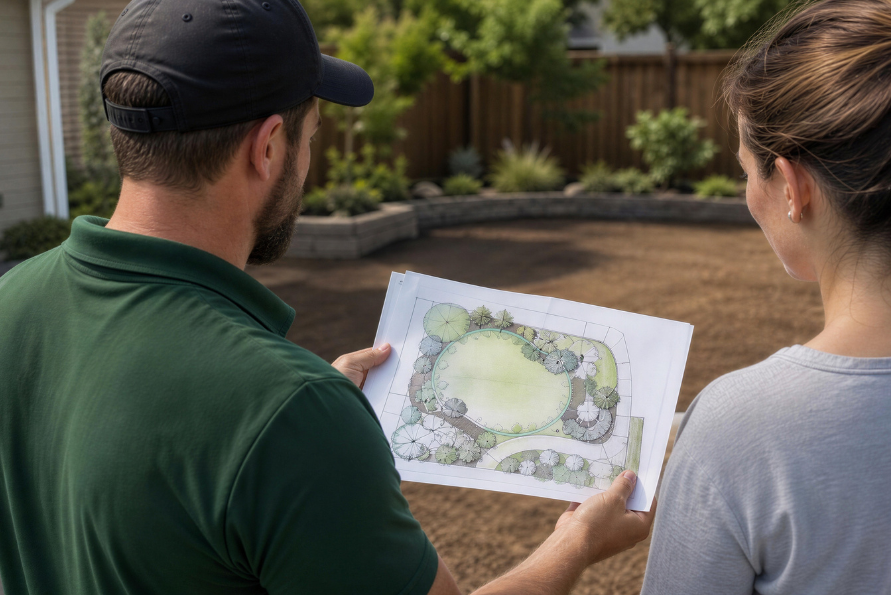
A design plan shows where each plant will go and how the space may look as everything matures.
What should I share with a designer at the start?
Talk about how the yard gets used day to day and which looks you enjoy most. Mention how much upkeep feels comfortable, too. Those details help a designer shape a plan around real life instead of a template.
Does a landscape project need to happen all at once?
Not at all. Plenty of homeowners start with a single area, such as a front entrance, and add more overtime. A good plan keeps each phase connected so the finished yard feels like one design.