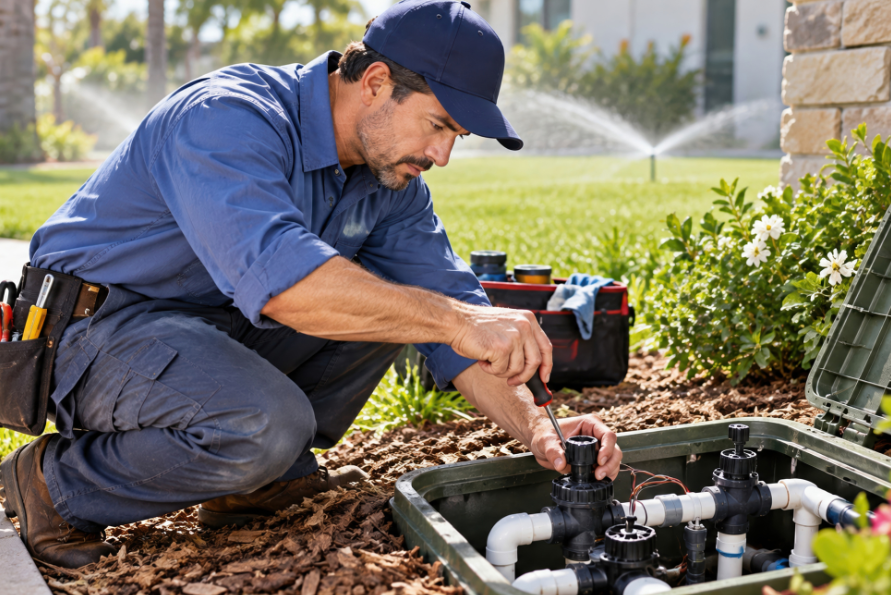
A sprinkler system should make landscape care easier. When it’s working properly, water reaches the right areas at the right time without much effort. But even a well-designed system can develop problems as seasons change. For homeowners in the Pittsburgh area, seasonal irrigation maintenance is especially important because systems must handle hot summers and cold winters.
Here are five signs that your sprinkler system may be ready for professional attention.
Your Sprinkler Heads Are Spraying Unevenly
One of the clearest signs of an irrigation problem is inconsistent water coverage. You may notice dry grass in one part of the yard while another area stays unusually wet; some sprinkler heads may also spray too far or in the wrong direction.
Sprinkler heads can shift over time. Lawn equipment, foot traffic, soil movement, and routine landscape work can all affect their position. When a head is no longer aligned correctly, water may land on sidewalks, driveways, patios, or other areas that do not need it.
A tune-up can include checking head placement and adjusting spray patterns. Cleaning clogged nozzles can also restore proper water distribution. These straightforward adjustments can help the system water your landscape more evenly and reduce unnecessary water use.
Your Lawn Has Dry or Oversaturated Areas
Your lawn can tell you a lot about how well your irrigation system is working. Brown patches, wilted plants, or unusually dry soil may indicate that certain areas are not receiving enough water. On the other hand, soggy grass or standing water can point to overwatering or poor distribution. These problems are not always caused by the amount of time the system runs. A sprinkler may be operating for the correct length of time but still fail to deliver water where it is needed.
A blocked nozzle, damaged head, incorrect spray pattern, or poorly adjusted zone can all contribute to uneven moisture. Pay attention to patterns rather than isolated spots. If the same areas repeatedly struggle while other parts of the landscape remain saturated, your irrigation system may need an adjustment.
Your Water Bill Has Increased Unexpectedly
A sudden increase in water use deserves attention, particularly if your household habits have not changed. Your irrigation system could be using more water than necessary because of a leak, a damaged component, an inefficient spray pattern, or a controller setting.
Small problems can be difficult to spot. A leak beneath the lawn may not create an obvious puddle. A sprinkler head may continue running correctly while sending water toward a driveway instead of the planting area. An incorrect schedule can also cause zones to run longer or more often than your landscape requires.
A professional tune-up provides an opportunity to inspect the system and make seasonal adjustments.
Your Controller Settings No Longer Match the Season
Irrigation needs change throughout the year. A schedule that made sense during a hot summer may be excessive during a cooler or wetter period. Likewise, a system that has sat unused through winter needs more than simply switching it back on. Your controller should reflect the current landscape conditions. If the schedule has not been adjusted in months, it may be time for a review.
Seasonal service can help bring the controller back in line with the landscape. Professional attention is useful after winter because the system may also need to be slowly repressurized. Taking the time to inspect and adjust components before regular watering begins can help identify problems early.
Your System Has Needed Frequent Repairs
One repair does not necessarily mean your sprinkler system needs major work, but repeated problems can be a sign that the system needs a more thorough inspection. Constantly replacing clogged nozzles or dealing with recurring leaks can become frustrating. It can also make it harder to maintain consistent watering across the landscape.
Regular maintenance is useful for both older and newer irrigation systems. A newer system still needs proper seasonal adjustments, while an older system may benefit from a closer inspection of its components and overall performance.
If your current system no longer provides reliable coverage, a professional can also determine whether repairs and adjustments are needed or whether certain components are due for replacement. For properties that need a new system, professional sprinkler system installation can provide a properly planned foundation for efficient landscape watering.
Why Seasonal Sprinkler Maintenance Matters
The purpose of a tune-up is to make sprinklers spray correctly. It’s about keeping the entire irrigation system working in coordination with the landscape.
Seasonal maintenance can include checking sprinkler heads, cleaning nozzles, adjusting coverage, and updating controller settings. These steps help the system respond to changing landscape conditions rather than following the same schedule all year. Winter preparation is especially important in Pennsylvania. Before freezing temperatures arrive, irrigation systems need to be properly winterized.
Final Thoughts
A sprinkler system should support your landscape, not create another maintenance problem. Uneven spraying, dry or saturated areas, unexpected water use, outdated controller settings, and recurring repairs are all reasons to take a closer look.
If you have noticed any of these signs, get in touch with us today to discuss your sprinkler system and request an estimate.
Frequently Asked Questions
How often should a sprinkler system be checked?
A sprinkler system benefits from seasonal inspections and adjustments. Spring is a good time to prepare the system for regular use, while fall maintenance can help protect it before freezing temperatures arrive.
What should I do if one sprinkler head is not working?
Check whether the head is clogged or blocked; if the problem continues, professional service can help determine whether the head, nozzle, valve, or another part of the system needs attention.
Can sprinkler maintenance reduce water waste?
Yes. Properly aligned heads, clean nozzles, appropriate schedules, and functional components can help water reach the intended areas more efficiently. Controller adjustments can also help match irrigation to seasonal needs.
Is winterization necessary for sprinkler systems in Pennsylvania?
Yes. Freezing temperatures can cause water left inside irrigation components to expand and damage the system, and professional winterization removes water from the system before freezing weather arrives.